Arancini with ragù
Saffron rice around a heart of ragù, peas and caciocavallo, with a crisp crumb coating: how arancini are made in eastern Sicily.
- Serves
- 12
- Prep
- 1 h
- Cooking
- 1 h 40 min
- Resting
- 2 h
- Published
- 19 October 2026
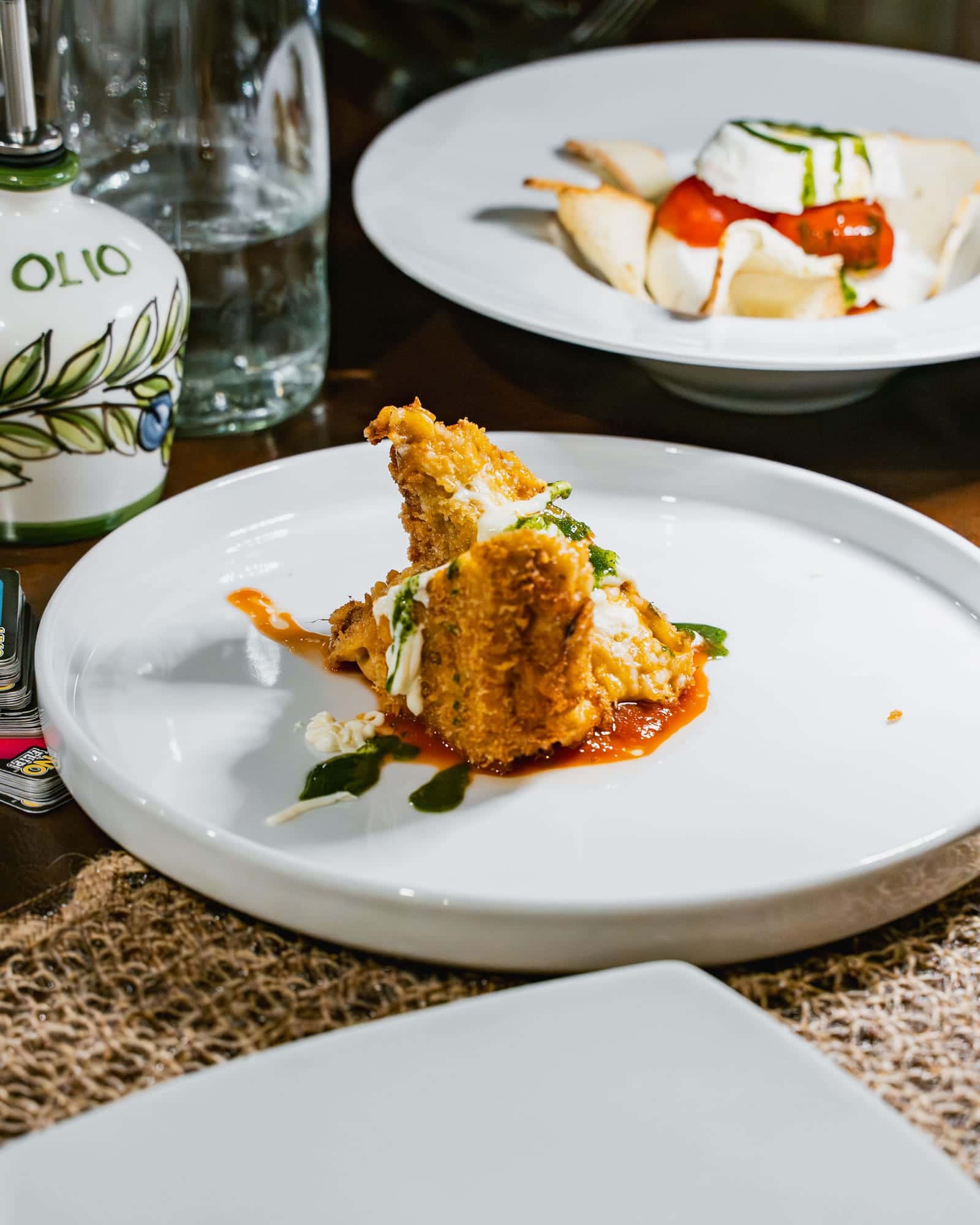
In eastern Sicily it is arancino, masculine, and the ragù version comes to a point. In Palermo it is arancina, feminine, and round. The argument has gone on for generations and nobody intends to settle it: here in the Val di Noto we say arancino and shape it into a cone.
The classic filling is meat ragù with peas and a few cubes of caciocavallo that melt as it fries. It is a dish to take slowly, ideally in two stages: the ragù and the rice one day, shaping and frying the next.
Ingredients
- 500 g Originario rice (or Arborio)
- 1.2 litres water, for the rice
- 0.3 g saffron, threads or powder (2 sachets)
- 40 g butter
- 60 g grated mature caciocavallo
- 300 g mixed minced beef and pork
- 1 small onion
- 1 carrot
- 1 celery stick
- 3 tablespoons extra virgin olive oil
- 100 ml red wine
- 300 g tomato passata
- 1 tablespoon tomato purée
- 150 g peas, fresh or frozen
- 150 g young caciocavallo, diced
- 150 g 00 flour, for the batter
- 220 ml cold water, for the batter
- 250 g dried breadcrumbs
- 1.5 litres groundnut oil, for frying
- Salt and black pepper
Method
Finely chop the onion, carrot and celery and soften them in the oil over a medium heat for five minutes. Add the meat, break it up with a wooden spoon and cook until it is no longer pink, then pour in the wine and let it bubble away.
Stir in the passata and tomato purée, season with salt and pepper, cover and cook over a low heat for 40 minutes. Add the peas and cook uncovered for another 15-20 minutes, until the ragù is thick and almost dry. Leave it to cool.
Bring the water for the rice to the boil with a teaspoon of salt and the saffron. Add the rice and cook it over a low heat, stirring often, until it has absorbed all the liquid: about 15-18 minutes. If it dries out too soon, add a splash of hot water.
Off the heat, stir in the butter and the grated caciocavallo. Spread the rice on a large tray, press cling film onto the surface and let it cool completely: at least two hours, or overnight in the fridge.
Make the batter by whisking the flour with the cold water until smooth, with no lumps. Put the breadcrumbs in a shallow dish.
With wet hands, take a handful of rice, about 110 g, and flatten it in your palm into a hollow. Put two spoonfuls of ragù and two or three cubes of caciocavallo in the middle, close it with a little more rice and shape it into a cone, pressing firmly so that no air stays inside.
Dip each arancino in the batter, then roll it in the breadcrumbs, making sure the tip is well coated too.
Heat the oil to 175-180 °C in a deep pan and fry two or three arancini at a time, fully submerged, for 4-5 minutes, until deep golden. Drain them on kitchen paper and wait a few minutes before eating.
Arancino or arancina
The name comes from arancia, orange: the round shape and the golden colour of the fried crust recall the fruit. From there Sicily splits. In Palermo and the west it is arancina, and on 13 December, the feast of Santa Lucia, people eat them by the trayful, because by tradition bread and pasta stay off the table that day. In Catania, Siracusa and the whole of the east it is arancino, and the ragù version takes on a pointed shape.
Rice and saffron reached Sicily with the Arabs, and the story of the arancino is often traced back to them. Tomato ragù, of course, came much later. What is certain is that today it is the best known Sicilian street food, and every family has its own version.
The tips that make the difference
The rice must be cold, even from the day before. Warm, it is soft and will not hold its shape; cold, it firms up and can be worked with wet hands without sticking.
The ragù must be dry. If it is still runny it soaks the rice from the inside, and the arancino splits as it fries. Better to cook it ten minutes longer than one minute less.
For the coating, a batter of flour and water often takes the place of egg: it makes a thin, even layer that holds the breadcrumbs well. When frying, the oil must cover the arancino completely: if the tip sticks out it cooks unevenly and breaks when you turn it. A kitchen thermometer prevents most problems.
Variations
The other great classic is the arancino al burro, with ham, mozzarella or béchamel, and a different shape from the ragù one, so you can tell them apart at a glance. Then there are spinach, alla Norma with fried aubergine, pistachio and mushroom.
The Basaricò menu, for instance, has an arancino reworked alla Norma, with a soft heart of ricotta and lemon: that is the one in the photo. At home, though, the leftovers rule applies: a good Sunday ragù, a piece of cheese, a handful of peas. That is how arancini come about too.
How to keep them
Fried arancini keep in the fridge for two days. To reheat them, use the oven at 180 °C for 15-20 minutes rather than the microwave, which softens the crust.
You can also freeze them uncooked, already coated: spaced out on a tray first, then in a bag. Let them thaw in the fridge for a few hours before frying.