Lemon granita, no ice cream maker needed
Lemons, water, sugar and a fork: Sicilian granita is made in the freezer, scraped every half hour. Eat it with a brioche col tuppo.
- Serves
- 6
- Prep
- 20 min
- Cooking
- 5 min
- Resting
- 4 h
- Published
- 19 October 2026
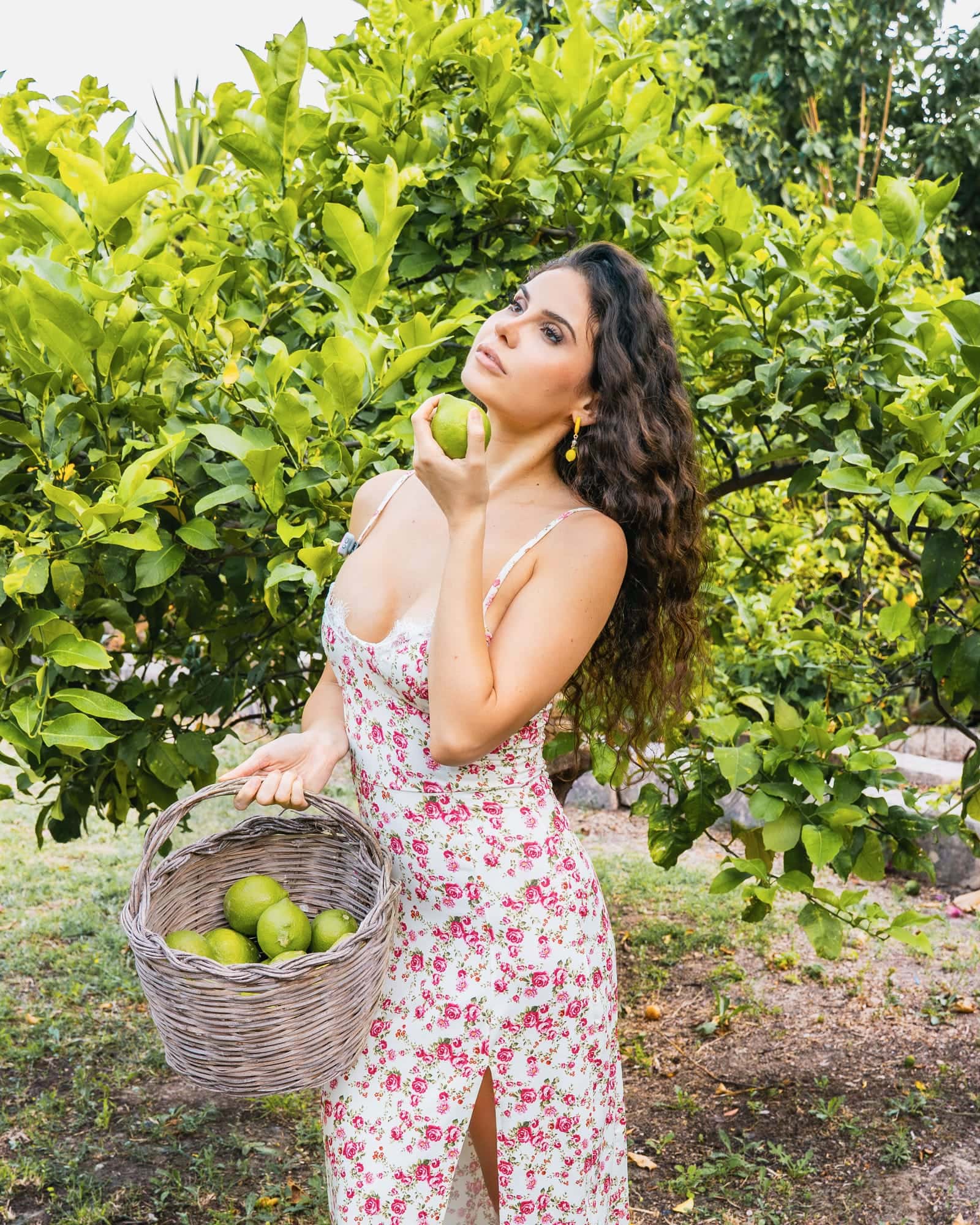
In Sicily granita is not ice cream and not crushed ice. It is water, sugar and fruit freezing slowly while someone breaks them up with a fork, until the crystals are small and the texture turns creamy. Cafés use a machine; at home all you need is a freezer and a little patience.
There is no shortage of lemons at the estate: there are 1,400 trees. Lemon granita is the simplest of all, and the one that tells you straight away whether the lemons are good. If you want to know where the rest of them end up, you will find them in the dishes at Basaricò.
Ingredients
- 250 ml lemon juice, from 5-6 lemons
- The zest of 1 unwaxed lemon
- 600 ml water
- 220 g granulated sugar
Method
Use a vegetable peeler to take a few strips of zest from the unwaxed lemon, yellow part only: the white pith underneath is bitter.
In a small pan, heat the water with the sugar and the zest, stirring, until the sugar has completely dissolved. Let it simmer for a couple of minutes, then take it off the heat.
Leave the syrup to cool completely, then remove the zest. If you are in a hurry, put it in the fridge.
Squeeze the lemons and strain the juice to remove seeds and pulp. Add it to the cold syrup and stir.
Pour the mixture into a wide, shallow container, ideally metal, to a depth of three or four centimetres, and put it in the freezer.
After about an hour, when ice has formed around the edges and on the surface, scrape it with a fork, drawing the crystals from the edges towards the centre.
Repeat every half hour for the next three hours, until the whole granita is made of small, soft crystals, with no liquid left.
Serve it straight away in glasses, with a brioche col tuppo on the side.
Before freezers, snow
For centuries, summer cold in Sicily came from snow. In winter it was gathered on Etna and in the Iblean mountains, packed into large stone pits called neviere and covered with straw so it would last into the warm months. Then it was carried down to the towns, where it was shaved and flavoured with syrups and fruit juices.
That is where granita comes from. In time the snow gave way to a tub of ice and salt that froze the mixture while it was turned, and then to today’s machines. The principle has stayed the same: freeze while stirring, so the crystals stay small.
A Sicilian breakfast
In summer, in much of Sicily, granita is breakfast: a glass of granita and a brioche col tuppo, the soft brioche with a little ball on top, like the bun of hair that Sicilians call a tuppo. You pull off the tuppo, dip it in the granita and carry on that way to the end.
With lemon, the brioche is eaten just as it is. With coffee or almond granita, many people also ask for whipped cream on top.
Tips and variations
Do not cut the sugar too much: it does more than sweeten, it stops the granita turning into a block of ice. With less sugar it sets harder and is difficult to scrape. And use a metal container, which chills faster and more evenly than glass or plastic.
Around here, where the Pizzuta d’Avola almond is grown, the local granita is almond: almond milk, water and sugar, made the same way. In summer there is black mulberry too, and in winter some make it with oranges or mandarins. For coffee granita, all you need is strong sweetened coffee, left to cool.
How to keep it
In the freezer, in a closed container, granita keeps for two or three days, but it tends to harden. Before serving, leave it in the fridge for five or ten minutes and scrape it again with a fork: it softens up again.